|
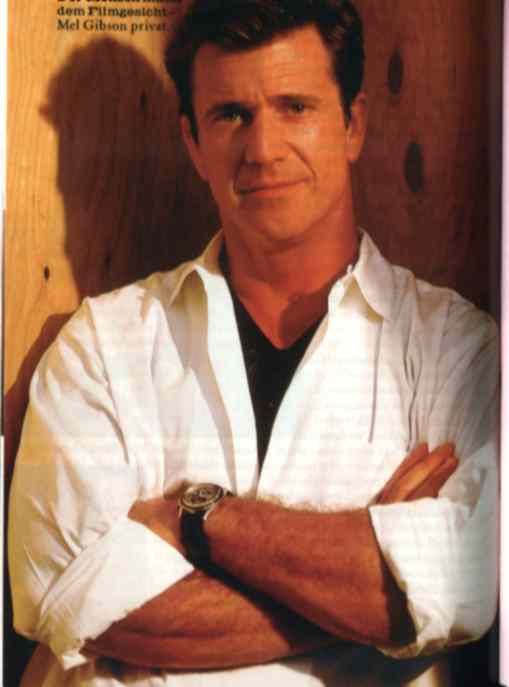
On
3rd January 1956, one of the least star-like of modern
stars came into this world, in the small town of Peekskill in
upper New York state. Mel Columbcille Gerard Gibson was
the sixth of ten children born to Hutton and Anne Gibson.
As might be guessed from the number of siblings, Mel Gibson's
parents were devout Catholics, of solid Irish stock.
Mel’s father had an extremely strong influence on how the
family was brought up. His father had been very religious and
had passed this on to Hutton. When a young man, Hutton decided
to enter the priesthood and attended a seminary, the Society
of the Divine Word, in Chicago. However, he disliked the
attempts of the Roman Catholic Church to make its liturgy more
modern and quit. He replaced the Church with the army another
all—male organization and served in the Pacific in World War
II. His experiences there, both of the Godlessness of his
fellow troops and the sights of war, made him determined that
no children of his should ever serve in the military. He also
visited Australia, his mother’s native country, as it was a
staging post for American GIs.
After leaving the army, Hutton took a job with the New York
Central Railroad to provide the means for a family that was
expanding rapidly. New York City seemed an unsuitable place to
bring a family up so the Gibsons moved upstate, first to
Crotonon-Hudson, and then to a slightly larger home at
Verplanck Point, also on the Hudson. This was to be Mel’s
first home.
 Life
in the Gibson household was run on severely moral grounds.
Hutton’s view of the world seems to have been quite fixed,
and he saw everything in black and white terms. Furthermore,
there was little money to go round because of Hutton’s job,
and the family was left to entertain itself using its own
resources, though the children found plenty to amuse them in
the countryside. From an early age, Mel was an entertainer,
using charm and humor to bend the rules. Life
in the Gibson household was run on severely moral grounds.
Hutton’s view of the world seems to have been quite fixed,
and he saw everything in black and white terms. Furthermore,
there was little money to go round because of Hutton’s job,
and the family was left to entertain itself using its own
resources, though the children found plenty to amuse them in
the countryside. From an early age, Mel was an entertainer,
using charm and humor to bend the rules.
 In
1961, the family moved to a farmhouse in Mount Vision. It was
Hutton’s dream to be able to bring his family up in an
idyllic environment and originally he had hoped to be able to
farm as well as hold down his railway job. The problem was
that Mount Vision is 200 miles north of New York, and this
meant that while he was away all week the family was totally
isolated, as Anne Gibson could not drive. The children went to
a non-denominational school, as Hutton was unable to find a
suitably reactionary Catholic one. Life was hard for the
Gibsons, and made significantly worse in 1964 when Hutton had
a serious accident in the rail yard, and lost his job. The
family had to move to cheaper rented accommodation, and
Mel’s elder siblings, who were now young adults, took jobs
to help out. Three years of fighting the railroad to gain
compensation now began. In
1961, the family moved to a farmhouse in Mount Vision. It was
Hutton’s dream to be able to bring his family up in an
idyllic environment and originally he had hoped to be able to
farm as well as hold down his railway job. The problem was
that Mount Vision is 200 miles north of New York, and this
meant that while he was away all week the family was totally
isolated, as Anne Gibson could not drive. The children went to
a non-denominational school, as Hutton was unable to find a
suitably reactionary Catholic one. Life was hard for the
Gibsons, and made significantly worse in 1964 when Hutton had
a serious accident in the rail yard, and lost his job. The
family had to move to cheaper rented accommodation, and
Mel’s elder siblings, who were now young adults, took jobs
to help out. Three years of fighting the railroad to gain
compensation now began.
Hutton became increasingly despairing of life in the USA. The
sixties were, in his eyes, a period of rapid moral decline —
free love, psychedelic drugs, rock music — and at the other
extreme, escalation of the war in Vietnam. He was also
increasingly aware that the northeastern United States still
clung to their Puritan roots and were actually hostile to
Catholicism (many settlers had gone to America to avoid
Catholicism in the first place). In February 1968 he won his
case against the railroad and received $145,000 in
compensation — a great deal of money nearly 30 years ago.
This helped Hutton to decide: he would take his family to the
other side of the world — Australia — a country where he
hoped that stricter moral values still pertained.
Hutton Gibson decided that the journey to Australia should be
an educative, leisurely tour, rather than a direct flight. And
so the family visited Ireland and Scotland, to show the
children where the family originated from, England and Rome.
In Rome the family spent much time at the Vatican, the center
of their faith. Mel also nearly got lost at Leonardo da Vinci
airport, which could have led to a very different career!
 The
family arrived in Melbourne in November 1968 and moved almost
immediately to a suburb to the north of Sydney. Mel was sent
to St Leo’s College, a traditionalist Catholic school then
run by the Christian Brothers. This was something of an ordeal
for him as he was mercilessly teased for his American accent
and the Brothers were renowned for running a strict regime. In
response Mel became something of a rebel, taking up smoking
and drinking and engaging in pranks designed to irritate his
teachers. The
family arrived in Melbourne in November 1968 and moved almost
immediately to a suburb to the north of Sydney. Mel was sent
to St Leo’s College, a traditionalist Catholic school then
run by the Christian Brothers. This was something of an ordeal
for him as he was mercilessly teased for his American accent
and the Brothers were renowned for running a strict regime. In
response Mel became something of a rebel, taking up smoking
and drinking and engaging in pranks designed to irritate his
teachers.
Eventually, though, he was rescued by his father from the
school, because Hutton did not feel the religious teaching was
adequate, and sent to Asquith High, a state school. Here Mel
was much happier and became effectively ‘Australianized’.
He continued to be regarded as something of an entertainer but
did not shine in any other way at school. Meanwhile, his
father was becoming increasingly isolated from the Catholic
Church, whose continual modernizing he abhorred, until he
eventually broke off completely from the official Church. At
home he inculcated his children with a highly conservative,
rigid religion, including extremist ideas of Jewish
anti-Catholic conspiracies.
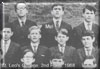 At
school, Mel continued to indulge in typical youthful behavior,
drinking beer, smoking and starting to date girls. In the
latter respect, contrary to the reputation he was later to
develop as a heart-throb, he was apparently shy and gawky,
certainly when on a one-to-one basis, and he came to prefer
mixing his dates with his mates, in authentic Australian macho
style. Eventually school came to an end and Mel had to think
of a career. During his early teens, due to his father’s
influence, he had considered entering the priesthood; by the
time he left school he no longer felt this calling. Journalism
was thought of and rejected aptly in view of Mel’s later
dislike of journalists. But fate took a hand: his sister
Sheila, who thought his skill at pranks and pratfalls
demonstrated thespian talent, filled out an application form,
and sent it with five Australian dollars and a photo, to the
National Institute of Dramatic Arts (NIDA) at the University
of New South Wales in Sydney. At
school, Mel continued to indulge in typical youthful behavior,
drinking beer, smoking and starting to date girls. In the
latter respect, contrary to the reputation he was later to
develop as a heart-throb, he was apparently shy and gawky,
certainly when on a one-to-one basis, and he came to prefer
mixing his dates with his mates, in authentic Australian macho
style. Eventually school came to an end and Mel had to think
of a career. During his early teens, due to his father’s
influence, he had considered entering the priesthood; by the
time he left school he no longer felt this calling. Journalism
was thought of and rejected aptly in view of Mel’s later
dislike of journalists. But fate took a hand: his sister
Sheila, who thought his skill at pranks and pratfalls
demonstrated thespian talent, filled out an application form,
and sent it with five Australian dollars and a photo, to the
National Institute of Dramatic Arts (NIDA) at the University
of New South Wales in Sydney.
THE
ROAD TO FAME
Mel’s approach to his new trade was fairly nonchalant. First
of all, he hadn’t known that he had applied to drama school
and second, he wasn’t desperate to be an actor. But at the
time of his application to NIDA, he was working in an orange
juice bottling plant, and an acting course must have seemed
rather more stimulating. Mel, somewhat to his own surprise,
was accepted for NIDA, in the face of competition from many
who were desperate to become actors. He attributed his success
to the fact that he had been forced to resort to subterfuge so
often at school, that this made him a natural. He had also
shown himself a good mimic at school, with a keen ear for
accents after all, he had had to adopt an Australian accent to
survive.
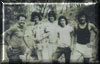
NIDA was a rather basic establishment at the time Mel
attended, consisting of leaky prefab huts at the University of
New South Wales. Staff and students at NIDA found his attitude
to the course less committed than theirs; Mel continued to
engage in practical jokes and found it hard to take some of
the exercises seriously. Many of the exercises were difficult
to perform, such as playing out a part and turning on
apparently strong emotions under the critical eyes of fellow
students and teachers. It has to be said in Mel’s defense
that the early seventies was an era when it was important to
be laid-back, and even if one was industrious as a student, it
was important not to admit it. Long hair and beards, marijuana
and stronger substances were in, and conformity to
unconventionality the norm. Mel was no exception, sporting a
beard and flowing locks. Mel also found it difficult at the
school because he did not have the same conviction, as the
other students that acting was the only thing he wanted to do
it certainly hadn’t been his original wish. At the same time
he was keenly aware that some of the other ‘committed’
students looked down on him for not having the same outward
dedication. Mel moved out of the family home after a year at
NIDA to live with three of his friends. Life hotted up, and
the four young men threw wild parties, annoyed the neighbors
and chased girls. Despite this he began to shine at NIDA; not
only was he cast as Romeo in the school’s production of
Romeo and Juliet, he also became known as a scene-stealer.
Whatever the importance of his role, he came to dominate
productions with his charismatic presence. His attitude to an
acting career was changing and he was beginning to enjoy the
work and throw himself into it. When his hair and beard were
cut for a forties production, Mel’s good looks were at last
truly revealed.
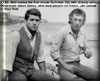 In
November 1976, it seemed that fame was beckoning, if in a
small way. The producer Phil Avalon contacted Mel and his
fellow student Steve Bisley and offered them both roles in a
low-budget ‘surfing’ film, Summer City, set in the
sixties. Summer City had hints of The Wild One, Easy Rider and
American Graffiti in that the plot involved a group of youths
arriving in a poky little town where they seduce one or more
of the local girls, and end up facing the guns of the local
populace/law enforcers. Fun ends in tragedy, and with it comes
the recognition that freedom has its limits. The total budget
was around A$100,000 and the actors’ fee was A$400, the
union minimum. It was the sort of operation where everybody
had to muck in and was a real introduction to the basics of
filmmaking for Mel. He also had a fling with the leading lady,
Deborah Foreman, which, when it was over, led to her making a
suicide attempt at a drunken, drug-ridden party. After the
film, Mel returned to NIDA to finish his course. In later
years, he has looked back on his time at NIDA with affection,
despite the early difficulties, and after the release of
Hamlet, he sponsored a scholarship there. In
November 1976, it seemed that fame was beckoning, if in a
small way. The producer Phil Avalon contacted Mel and his
fellow student Steve Bisley and offered them both roles in a
low-budget ‘surfing’ film, Summer City, set in the
sixties. Summer City had hints of The Wild One, Easy Rider and
American Graffiti in that the plot involved a group of youths
arriving in a poky little town where they seduce one or more
of the local girls, and end up facing the guns of the local
populace/law enforcers. Fun ends in tragedy, and with it comes
the recognition that freedom has its limits. The total budget
was around A$100,000 and the actors’ fee was A$400, the
union minimum. It was the sort of operation where everybody
had to muck in and was a real introduction to the basics of
filmmaking for Mel. He also had a fling with the leading lady,
Deborah Foreman, which, when it was over, led to her making a
suicide attempt at a drunken, drug-ridden party. After the
film, Mel returned to NIDA to finish his course. In later
years, he has looked back on his time at NIDA with affection,
despite the early difficulties, and after the release of
Hamlet, he sponsored a scholarship there.
The main benefit of the film, so far as Mel was concerned, was
that his participation attracted the attention of Bill
Shannahan, one of Australia’s most prestigious agents.
Shannahan got Mel work on an Australian soap (The Sullivans)
for two weeks. This brief exposure to television put Mel off
the medium almost permanently — only once more was he to
work in television. Soaps operate with a minimum amount of
rehearsal, both for actors and for scriptwriters; for the
serious actor they can be profoundly dissatisfying, as the
emphasis is on getting the series out, not on the quality of
acting.
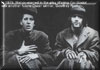 Luckily,
Mel’s next work was with the South Australian Theatre
Company, a touring company, for whom he performed in Samuel
Beckett’s Waiting for Godot. The part was physically
exhausting and Mel had quite serious breathing problems due to
his heavy smoking. The critics were not aware of this,
however, and it received excellent reviews. It was on this
tour, in Adelaide, that Mel met Robyn Moore, his future wife,
a dental assistant who rented a room in the same house. Mel
got to know her over a fairly long period she already had a
boyfriend and Mel had to wait. She is described as being a
fairly quiet person but for Mel she was to become a pillar of
support in later years. In the meantime, Shannahan was
spreading the word about Mel and a new offer came through in
September 1977 from Dr George Miller, a producer—director.
Mel couldn’t start immediately as he had to finish his
course and graduate, which he did in October. George Miller
held up work on the film until Mel could begin. The movie? Mad
Max. Luckily,
Mel’s next work was with the South Australian Theatre
Company, a touring company, for whom he performed in Samuel
Beckett’s Waiting for Godot. The part was physically
exhausting and Mel had quite serious breathing problems due to
his heavy smoking. The critics were not aware of this,
however, and it received excellent reviews. It was on this
tour, in Adelaide, that Mel met Robyn Moore, his future wife,
a dental assistant who rented a room in the same house. Mel
got to know her over a fairly long period she already had a
boyfriend and Mel had to wait. She is described as being a
fairly quiet person but for Mel she was to become a pillar of
support in later years. In the meantime, Shannahan was
spreading the word about Mel and a new offer came through in
September 1977 from Dr George Miller, a producer—director.
Mel couldn’t start immediately as he had to finish his
course and graduate, which he did in October. George Miller
held up work on the film until Mel could begin. The movie? Mad
Max.
MAD MAX AND BEYOND
Mel’s breakthrough came almost as soon as he had left
college. Although nobody expected it, this movie was to gain
worldwide fame, with a poor showing only in the US. Mel’s
fee was A$10,000, which was a serious sum of money for a
recently graduated actor. Like Summer City, making the movie
was very much a group activity. Actors helped shift equipment
and there was no hierarchy, unlike in Hollywood. The crew and
the cast shared a large house in Melbourne, and among their
number were sonic real Hell’s Angels, who played the ‘Toe
Cutters’. The budget for the film, which was to include a
great deal of hair-raising action, was only A$250,000 a
minuscule amount by Hollywood standards. Mad Max is set in the
near future, in a city in a post—apocalyptic world, where
there are villains and heroes, and hardly anybody else. Max is
not exactly verbose and the similarities of his character to
that of a taciturn Clint Eastwood in the Dollars series are
obvious. Miller wanted to create a new sort of Western, with
the forces of good and evil immediately identifiable. Its
reputation for fairly mindless violence packed the cinemas,
and the Australian Film Institute gave it no less than six
awards, including best actor for Mel. An important part of its
success was that it drew young men in droves to the cinemas
generally they are hard to attract because of its high—
adrenalin automotive action.
The success of Mad Max brought in multiple offers of work and
Hollywood agent Ed Limato sought to put Mel on his books. It
was at the start of a frenetic period of activity for Mel, the
first of three films in a year. After Mad Max, there was more
stage acting in Oedipus Rex and Henry IV in Adelaide, and
another movie project, Tim, which was as about as far removed
as it could have been from his previous role. Mel played a
mentally retarded gardener who develops a relationship with a
handsome woman in her mid-forties. She helps to educate him
and in so doing revives her own positive attitude towards
life. Tim helped hone Mel’s acting skills: in Mad Max he had
not been stretched by the dialogue or by the demands of
playing a particularly multi—faceted character. As a
perfectionist Mel always wanted to spend more time on each
scene of Tim, but because he was so quick to pick up director
Michael Pate’s ideas, much of the film was shot in one take.
It was filmed near Sydney and Robyn followed Mel up there,
which indicates how the relationship was developing. While not
a great international success, Tim did earn Mel an Australian
Film Institute best actor award in 1979. He was seen as having
sensitively developed the role, conveying the innocence of
Tim’s character rather than his backwardness. It also showed
the range of which he is capable to a wider film audience.
After, filming was complete, Mel was expected to take part in
publicity for the film, and here his reputation for being
uncooperative with the press began. Mel’s attitude to his
work is that it is a job, and while he is entirely capable of
commenting on any aspect of that job, such as his role, he
does not feel it necessarily qualifies him to give his opinion
on broader issues like the direction of the film industry or
whatever, and where he does not feel qualified to comment, he
does not. If a question isn’t relevant he won’t answer it.
There is an absurd notion prevalent that because stars are so
much in the public eye, they are therefore qualified to talk
about any issue. Mel does not subscribe to this.
During the period that the film was released, Mel had several
stage roles: in Romeo and Juliet, No Names, No Pack Drill (a
play set in World War II Australia) and Waiting for Godot. The
reviews, especially for the latter, were very enthusiastic.
Mel’s next film was Attack Force Z, a World War II yarn set
in the Pacific. Things did not go well. The director initially
chosen, Philip Noyce (who later directed Patriot Games and
Dead Calm, among others), rowed with the producer over the
budget and had to be replaced by Tim Burstall. Most of the
cast, apart from the American John Philip Law, were unhappy
with the change. Apparently Mel and the other Australian
actors told Burstall that they simply did not want to do the
film with him. Law was the star of the film, and his fee was
$50,000 as opposed to the $1,000 a week that Mel and New
Zealander Sam Neill received. He also stayed in a decent hotel
while their accommodation was fairly shabby. This discrepancy
rankled. Law was also six foot five, which meant that he had
to adopt some ridiculous poses to make him and Mel appear to
be of similar height. (Mel’s height seems to have varied
slightly over the years, depending on who you believe, but the
general consensus is that he is five eight or nine.) The film
was shot in Taiwan as it was cheap to produce there, with
plenty of Chinese extras to play Japanese soldiers. When
completed the film received good reviews, but was not released
in America. Mel had been unhappy with the whole project,
drowning his sorrows in copious amounts of Taiwanese beer
during the shoot, and was scathing of the movie itself
thereafter. Also, according to one source, Mel visited a
brothel there. In fact, the occasion was innocent. The
Taiwanese ‘fixer’ for the film, Mr. Koo, invited several
of the leading actors, including Philip Law and Mel, to what
he thought was a Japanese restaurant. To the guests’
surprise the staff turned out to be young, female and naked!
They later ascribed this to Mr. Koo’s idea of full Oriental
hospitality. After the film, Mel ‘rested’ (the classic
actors’ euphemism) determined not to act in any more low
budget movies.
Roughly six months after the end of shooting, Mel married
Robyn Moore in Forestville, New South Wales on 7 June 1980.
The couple honeymooned north of Sydney at a friend’s house.
The need for money began to press on Mel, as Attack Force Z
had made him only 86,000, and Mel accepted a part in a TV
series Punishment, one of several Australian prison dramas. As
with The Sullivans, he disliked the process of TV production,
where tight schedules and arduous hours allowed no time to
develop a character. This came to an end, though, when Peter
Weir, the director of Picnic at Hanging Rock a film that had
done much to alert the world to the renaissance in Australian
movie-making approached Bill Shannahan to see if Mel could act
in his forthcoming film Gallipoli. This was the first
involvement of media magnate Rupert Murdoch in backing a film,
though later he acquired Twentieth Century Fox.
The Gallipoli campaign, a military disaster, had burnt itself
into the Australian consciousness, because such a large part
of the forces involved were Australians and New Zealanders. It
was similar in its impact to the Western’ Front for the
British and French. Essentially, it was a rite of passage,
both for the innocent young men involved most of whom had
never been abroad, let alone to Turkey, let alone introduced
to the honors of modern warfare and for the nation. The
sacrifice made Australia feel that it was on a level with the
mother country, no longer a colony. In the film the story is
portrayed through the eyes of Frank and Archie, two country
boys who think they are off to save the world. Their
experiences soon disillusion them, though the grim reality of
their situation is partly compensated by the comradeship that
develops between them.
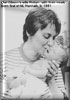 The
film was shot in difficult conditions in the outback at
Beltana where the action begins and the camel—racing takes
place, it was blisteringly hot and dusty; at Lake Torrens,
bitterly cold. The filming then moved, though, into the
congenial town of Port Lincoln, where a reconstruction of
Anzac Cove had been built on the coast. The final part of
shooting took place in Egypt, as Cairo had been the way
station for ANZACs destined for Gallipoli. While Mel was there
his first child, Hannah, was born. The
film was shot in difficult conditions in the outback at
Beltana where the action begins and the camel—racing takes
place, it was blisteringly hot and dusty; at Lake Torrens,
bitterly cold. The filming then moved, though, into the
congenial town of Port Lincoln, where a reconstruction of
Anzac Cove had been built on the coast. The final part of
shooting took place in Egypt, as Cairo had been the way
station for ANZACs destined for Gallipoli. While Mel was there
his first child, Hannah, was born.
Reviews of the film were excellent. Some of the British papers
did not like some of the anti—British sentiments expressed
in the film, the difference being that in World War I, the
Australians tended to question what they regarded as
ridiculous orders, whereas the British did not. The film was
received rapturously in Australia and garnered nine awards
from the Australian Film Institute, including another best
actor for Mel. It also did well in the UK.
Gallipoli was followed up in 1981 by Mad Max II The Road
Warrior. This had a classic Western plot, where a roving
law— enforcer comes to the rescue of a civilized settlement
under attack from savages, in this case not Red Indians or
bandits, but Hell’s Angel variants distinguished by their
ruthless brutality and their eccentric machinery.
Mad Max has returned in a somewhat damaged state with his leg
in a brace, and had been reduced to eating dog food. The
picture is solid action, with no mercy for the squeamish, and
full of spectacular stunts. The final scenes, in which Mel
draws off the assailants, while the townsfolk head off in
another direction, are particularly gripping. Usually children
and animals are regarded as the kiss of death by adult actors,
as they distract audiences, but Mel did not find this a
problem and developed a good relationship with Emil Minty, who
played a feral child. The Road Warrior eventually grossed more
than Mad Max, making over $100 million and did respectably in
the USA, where it earned $24 million. It also marked Mel’s
attractiveness to the fairer sex, as it was noted that women
were as enthusiastic as men to see the film, unlike Mad Max
which had been mainly popular with young men.
Mel often expressed his wish to get away from being typecast
as a policeman (Mad Max, though it’s sometimes hard to
believe, was a policeman) or as a soldier. His next project
was to satisfy this wish.
After the success of Gallipoli, Peter Weir took on Mel for
another project, The Year of Living Dangerously, in which Mel
starred as an Australian journalist who has an affair with a
British diplomat, played by Sigourney Weaver. Because
Sigourney Weaver is so tall, Mel had to have his shoes built
up to match her height. The story was set in 1 965 in
Indonesia in a period of great political turmoil. This was
Mel’s first encounter with different American schools of
acting, a process he found educative, though he has never
become a Method actor (where actors try and become the
character they are playing, by behaving like that character
all the time). Mel has always said he plays a part from
outside. The film was difficult to shoot. Most of the location
work was done in the Philippines, and the cast was subject to
death threats from local Muslim fanatics, who thought the
movie would be disrespectful to Allah. Because of this,
towards the end of the shoot some scenes were shot in
Australia, which suited Mel as his wife gave birth to twins on
2 June 1982 and he was able to be present this time. Though
well crafted, the film did not seem to catch the imagination
of audiences and was not the success it might have been.
However, it did take Mel to Cannes for a showing at the annual
film festival in May 1983, where he was compared to ‘other
male hero characters John Wayne from the old generation, and
Harrison Ford and Tom Selleck from the new.
After Living Dangerously, Mel turned down several lucrative
film roles arranged for him by Ed Limato in Hollywood. Mel has
declared that stage acting is preferable as a means of honing
one’s acting skills to film work, and proceeded to take the
part of Biff in Arthur Miller’s Death of a Salesman, which
played in Sydney for two months in the autumn of 1982. Mel has
asserted that with stage acting you get a real response,
unlike films where the only real audience, in terms of
response to one’s performance, is the director. But
Hollywood still beckoned, despite Mel’s preference for
Australia, and Ed Limato got Mel a role in The Running Man,
but he withdrew before production to take the role of Mr.
Christian in The Bounty.
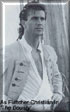 The
Bounty was shot on Moorea, an island off Tahiti. While it
might be many people’s idea of the perfect holiday
destination —palm trees and white beaches — to stay and
work on such a place for four months is pretty claustrophobic,
with little in the way of entertainment apart from the bars.
In a historical irony, the behavior of the original Bounty
crew when it arrived in Tahiti in the 1780s was repeated by
the film crew. Some took up with local women and there were
brawls with the locals, as there had been in the l960s’
version. When away from Robyn, Mel indulged in marathon
drinking sessions, one of which ended up in a minor fracas.
While this might have endeared him to the Tahitiarians, the
black eyes and bruises that resulted meant rescheduling of the
scene-shooting order. All in all, the shooting of the film was
not a particularly good period for Mel, and harsh words were
said about his behavior. Later, when the film was released,
the reviews were equally critical. Remakes of classics are
highly risky: not only are they criticized in their own right,
but also by comparison, and The Mutiny on the Bounty has
received several film treatments including the classic 1962
Trevor Howard/Marlon Brando version. The
Bounty was shot on Moorea, an island off Tahiti. While it
might be many people’s idea of the perfect holiday
destination —palm trees and white beaches — to stay and
work on such a place for four months is pretty claustrophobic,
with little in the way of entertainment apart from the bars.
In a historical irony, the behavior of the original Bounty
crew when it arrived in Tahiti in the 1780s was repeated by
the film crew. Some took up with local women and there were
brawls with the locals, as there had been in the l960s’
version. When away from Robyn, Mel indulged in marathon
drinking sessions, one of which ended up in a minor fracas.
While this might have endeared him to the Tahitiarians, the
black eyes and bruises that resulted meant rescheduling of the
scene-shooting order. All in all, the shooting of the film was
not a particularly good period for Mel, and harsh words were
said about his behavior. Later, when the film was released,
the reviews were equally critical. Remakes of classics are
highly risky: not only are they criticized in their own right,
but also by comparison, and The Mutiny on the Bounty has
received several film treatments including the classic 1962
Trevor Howard/Marlon Brando version.
AMERICAN DEBUT
After The Bounty, Mel went on to play his first screen role as
an American, and an American with a Tennessee accent at that.
Mark Rydell, the director, had serious doubts about casting
Mel in the part of a redneck farmer in The River, because he
assumed Mel would have an Australian accent. But Mel’s
ability to mimic convinced him and Mel got the lead role,
playing opposite Sissy Spacek. The film was shot in eastern
Tennessee and Robyn and the family came to stay nearby. It
received moderate acclaim, most of it for Sissy Spacek who
received an Oscar nomination. Mel’s next role was in a film
called Mrs. Soffel, where he played opposite Diane Keaton; he
was a prisoner, and she the warder’s wife who falls in love
with him. The shooting conditions, in Canada and Pittsburgh,
were miserable, as much of the time was spent hanging round in
the freezing cold. Mel’s drink problem also received
prominence on 25 April 1984 he was picked up for drunk
driving, for which he received a three-month ban and a $300
fine. The reaction to the film itself was pretty mixed; Diane
Keaton and Woody Allen is one thing, but Diane Keaton and Mel
Gibson did not have the same chemistry.
Meanwhile, the ghost of Mad Max had reappeared. Hollywood was
now interested, given the success of his previous two
incarnations, and Warner Brothers were prepared to make a
big-budget sequel. Mad Max Beyond Thunderdome was shot right
in the middle of Australia, at Coober Pedy, 500 miles
northwest of Adelaide, where the temperatures were so high
that several members of the crew were struck down with heat
exhaustion. Mel was tired from the films he had recently
completed, only having taken a three-month break, and
apparently took to the bottle in a big way. Reputedly, he was
knocking back five bottles of beer before starting work, and
drinking more through all the rest periods. He missed his
family, his previous three films had made no real impact, and
consequently he faced the end of any future he might have in
Hollywood. He needn’t have worried. Beyond Thunderdome was a
great success, making $40 million in the US alone.
Afterwards Mel decided to make a proper break and bought a
farm in northern Victoria, which he began to work. He wanted
to re—establish his links with his family as he was spending
too much time away from them. He formed a production company
Lovell Gibson with Pat Lovell, an Australian producer, the
idea being to develop film projects in Australia.
Unfortunately it did not quite work out like that, as a
Hollywood producer, Jerry Weintraub suggested a link-up that
would give him first refusal on any projects Lovell Gibson
came up with. There was also one condition: Mel would have to
star.
Soon after the, company’s foundation, Mel headed off to
Hollywood to make Lethal Weapon, taking his family with him.
Lethal Weapon was in the genre at which Mel excelled. It used
the formula of two men Marty Riggs and Roger Murtaugh (played
by Danny Glover) one active and aggressive, one older and
wiser, who are thrown together by their work, don’t
initially respect each other’s qualities, but then come to
do so. The movie is full of violence and has no romantic
interest. Mel appreciated the character of Martin, a suicidal
loner, a Vietnam veteran whose wife had died, and whose world
has fallen apart. Being a very private person, he could
empathize with the part. Danny Glover is a method actor, which
meant his approach to acting was totally different from
Mel’s, but nonetheless the two leads got on reasonably well
together. Their different approaches mirrored the differences
between the characters they played one more off the hip, one
more reflective, thereby achieving the intention of the
director, Richard Donner of Superman fame. Donner had been
worried that Mel would cause problems during production. In
the event, Mel was highly professional. Having benefited from
his break, and with Robyn there, he stayed on the wagon. Robyn
left shortly after the film’s completion, but Mel stayed on
in his Santa Monica flat. He soon started to drink again; beer
resumed its place in his life, and there were rumors that he
was enjoying some dates.
During the Cannes Film Festival of 1987, which he attended to
promote Lethal Weapon, Mel had to engage in typical ‘star’
activities such as setting his palm in concrete. He was also
the focus of attention of several women, some of whom were
rich and powerful. It seems as if he found the glitz and
glamour all too much; he retired from his hotel to a yacht
Jerry Weintraub had chartered, and gave himself over to the
bottle. Eventually, he had had enough and asked Pat Lovell to
arrange for his immediate return to Sydney and the family.
Lethal Weapon, in its three installments, did amazingly well
at the box office, peaking at $300 million for Lethal Weapon 3
in 1992. Critically, the reaction was mixed. The level of
violence was extremely high and the movies provoked much
debate as to whether celluloid violence was imitated on the
street. The argument still runs, as effects get ever more
realistic and gory. Still, the public clearly has an appetite
for violence as the success of films such as the Terminator
series or Robocop make all too clear. Whether it is better to
portray violence in a fantasy world or in ugly reality as in
Lethal Weapon, is at the heart of the issue.
Mel’s partnership with Pat Lovell came to an end in January
1989, when Mel formed a production company in Los Angeles.
Lovell was eventually paid $1 for her share in the folded
company. Ed Limato’s strenuous efforts to keep Mel in the US
seemed to be paying off. In 1990 Bill Shannahan died. He had
been a mentor as well as an agent for Mel and had made an
effort to keep Mel working in Australia. During the late
eighties, though, Mel’s particular wish was to work in a
comedy film. It was not just that Paul Hogan was so successful
in Crocodile Dundee, it was also because he didn’t wish to
be stereotyped and wanted to extend his acting range. Such a
project never came up.
At the time when Lethal Weapon was released, Mel had his first
flirtation with politics. While not eligible to vote in
Australia because of his American passport, he clearly feels
that it is his adopted land, and has an interest in issues
there. The person he chose to support in 1987 was Robert
Taylor, a fundamentalist conservative. People turned up to the
rallies, presumably to see Mel rather than listen to
Taylor’s extreme pronouncements. Liberal Australia, as
represented by the quality press, found Mel’s association
unusual. Mel was perhaps taking after his father, the man for
whom the Roman Catholic Church was too liberal. Two years
later he was to support Barry Tattersall, another independent
candidate during the federal elections, and express views such
as support of capital punishment, loathing of high taxation
and government intervention and the moral decline of the West.
 After
the success of Lethal Weapon, the offers flooded in for work.
Mel was even offered a role in the long-running soap Dallas,
at the instigation of Victoria Principal. (Of course, she had
no idea of Mel’s deep-seated aversion to TV work, whatever
the money.) Mel bought a house in Malibu after the second
Lethal Weapon film, as Los Angeles was becoming his base, and
his loyalties were shifting from Australia to the USA. There
has been some slight resentment in Australia at this shift.
Naturally, Australians like to regard Mel as one of their own
because he had become so Australianised and began his
successful career there. But Mel has never given up his
American passport and the USA is his native country. And
though Mel had resisted the lures of Tinsel town, Hollywood is
renowned for sucking people in and keeping them there, at
least so long as they are successful. Also as the children
grow older, Robyn has insisted that they need to be educated
in one place, which currently means staying in Los Angeles. After
the success of Lethal Weapon, the offers flooded in for work.
Mel was even offered a role in the long-running soap Dallas,
at the instigation of Victoria Principal. (Of course, she had
no idea of Mel’s deep-seated aversion to TV work, whatever
the money.) Mel bought a house in Malibu after the second
Lethal Weapon film, as Los Angeles was becoming his base, and
his loyalties were shifting from Australia to the USA. There
has been some slight resentment in Australia at this shift.
Naturally, Australians like to regard Mel as one of their own
because he had become so Australianised and began his
successful career there. But Mel has never given up his
American passport and the USA is his native country. And
though Mel had resisted the lures of Tinsel town, Hollywood is
renowned for sucking people in and keeping them there, at
least so long as they are successful. Also as the children
grow older, Robyn has insisted that they need to be educated
in one place, which currently means staying in Los Angeles.
The next project Mel accepted was Tequila Sunrise. Mel played
an erstwhile drug dealer, despite having refused such a role
in earlier days when he stated that it was morally offensive
to him. His character, Dale McKussic, has effectively reformed
by the start of the film, and the story revolves around his
confrontation with an old school friend who is in the drugs
squad, including rivalry for the attentions of Michelle
Pfeiffer. The film received mixed reviews, partly because
reviewers found it hard to believe that an ex-drugs dealer was
a suitable hero for a romantic comedy. It’s box office
receipts in the USA were less than half those of Lethal
Weapon.
Kurt Russell played opposite Mel in Tequila Sunrise, and the
two became good friends. Russell’s partner is Goldie Hawn
who effectively started her career in the sixties’ comedy
series Rowan and Martin’s Laugh-in where she played a
preternaturally dumb blonde, a role in which she was to some
extent typecast thereafter. A new project was put together for
Mel and Goldie, Bird on a Wire. This was a fairly brainless
chase movie, but it did quite well, earning the same as Lethal
Weapon in the USA. When Bird on a Wire was over, Mel headed
back to Australia for some well-deserved rest on his farm.
THE ESTABLISHED STAR
In 1987 some of the British tabloids began to spread rumors
that Mel was dating Cassandra Kirton, an English girl he had
met in Los Angeles. Another story dating to late 1986 links
him with Miranda Brewin, another English girl he had met in
Sydney. Mel threatened legal action and the papers retracted.
Both girls denied that anything untoward had happened; they
had just enjoyed boozy evenings where Mel relaxed.
These stories were followed up by articles in an American
tabloid, the Globe, in 1993, which carried pictures of Mel
allegedly fooling around with sonic women in a bar in Modesto,
California. Mel’s lawyers threatened the Globe with a
lawsuit, though this never materialized. As a result of the
latter incident Mel decided that his drinking was getting out
of hand, and that the publication of these sorts of stories
did his marriage no good. In the middle of 1 991 he had
enrolled with Alcoholics Anonymous, as Ed Limato and Robyn
were both very concerned about the effect alcohol might have
on his career, and after the Modesto escapade, he attended
more AA meetings while continuing to fulfill his obligations
on set. Furthermore, the mood in the US and in Hollywood in
particular, was growing hostile to alcohol. Mel’s visits to
AA meetings were reported in the Sunday Mirror on 15 September
1991, after unsuccessful attempts by Limato to raise an
injunction for breach of privacy. (It is a poor reflection on
somebody that his attendance was ever tipped off to the papers
— the second ‘A’ in AA is supposed to be sacrosanct.)
Shooting for Mel’s next major project, Air America, began in
early 1990. The film was based on the activities of the CIA in
running an airline into Laos during the Vietnam War. The CIA,
with typical deviousness where covert operations were
concerned, transported anything it thought would help the war
effort — drugs, arms, whatever. This secret war, hidden from
the American people, became a major scandal when it was
revealed.
Filming was done near the Golden Triangle, the notorious
drug-growing area in the north of Thailand and Laos. Robyn and
the family came to join Mel for a while and this helped keep
him calm during the making of the film. The cast and crew were
working in isolated jungle conditions, with all the discomfort
this implies mosquitoes, days of torrential rain, basic
accommodation. The actors and crew also had to be protected by
their Thai colleagues from swarms of prostitutes. Robyn left
after a while, as she wanted to have their sixth child back in
Australia. Mel reverted to his usual pattern of heavy
drinking, getting into arguments, waking up bad-tempered,
often feeling guilty with post-alcohol depression about what
he might have got up to the night before. This ended after
Robyn had given birth to Milo and returned a few weeks later
to Thailand. Mel was relieved when shooting was over and he
could return to Australia to be with his family and newborn
son.
The net result of all this discomfort was not a success. The
producers wanted a more cheerful ending after seeing the final
product, as if failing to recognize that Air America dealt
with a sordid period in US foreign policy, whatever the
individual bravery and morality of the pilots involved. A
different ending was patched on, with Mel doing the final
scenes in Shepperton Studios. Many veterans of the real Air
America thought that the film trivialized their efforts and
complained vociferously.
After the poor showing of Air America, Mel’s next project
was as different as it could possibly be. Twenty years before
Franco Zeffirelli had made a successful film version of Romeo
and Juliet, starring two virtual unknowns, Simon Ward and Jane
Seymour. This had been an unexpected runaway success. Since
then, he had made The Taming of the Shrew, with Richard Burton
and Elizabeth Taylor, which had done moderately well.
Zeffirelli was renowned for a somewhat lavish approach to
Shakespeare, which did not always fare well with the critics,
even if audiences enjoyed it. Zeffirelli persuaded Mel to star
in a movie version of Hamlet. The budget for the film was
substantial — $15 million most of which reputedly came from
Warner Brothers as they were keen to sign Mel to a long—term
contract. News of Mel’s reincarnation as the Prince of
Denmark was greeted with virtual incredulity. Not all of his
roles had been rich in dialogue, and here he was, about to
embark on a project that was 99 per cent dialogue, 1 per cent
action. Furthermore, the cast included some highly respected
names — Glenn Close, Alan Bates, Ian Holm and Helena
Bonham-Garter.
 Mel
became utterly absorbed in the part. It had been forgotten or
not known by many who laughed at him, that he had already been
in several well—received serious stage productions. Indeed,
if it weren’t for the money to be made in films, the stage
would have had more of his time. But this was his first
venture into film for the type of audience that attends the
serious theatre. He was aware of the possible reaction of such
an audience and it added to the tension he felt at playing the
part. But despite any initial reservations they may have had,
his fellow actors came to respect Mel’s performance. He was
glad, though, when shooting came to an end. Mel
became utterly absorbed in the part. It had been forgotten or
not known by many who laughed at him, that he had already been
in several well—received serious stage productions. Indeed,
if it weren’t for the money to be made in films, the stage
would have had more of his time. But this was his first
venture into film for the type of audience that attends the
serious theatre. He was aware of the possible reaction of such
an audience and it added to the tension he felt at playing the
part. But despite any initial reservations they may have had,
his fellow actors came to respect Mel’s performance. He was
glad, though, when shooting came to an end.
Unusually, Mel threw himself enthusiastically into promoting
the film, entirely changing his demeanor to the press. The
only difficult part for him was that his mother died in
December 1990, just before the US release, and he was
disappointed that she would never see him in the sort of role
to which he had always aspired. Nevertheless, he soldiered on
with the film’s promotion after returning to Australia for
her funeral.
The period before Hamlet’s review by the press must have
been nail biting for Mel. Whatever an actor puts into a
performance, he can never truly guess the reaction of the
critics. He needn’t have worried. The reviews in the US were
almost entirely favorable and most Australian critics
applauded it. Reservations were strongest in the UK, where it
was felt that Mel’s interpretation was a little wooden,
solid but missing the nuances. Whatever one’s view, it did
help to popularize Shakespeare, and was a worthy project to
undertake. He didn’t receive an Oscar for the part but he
was given a Will Award by the Shakespeare Theatre, Washington.
After Hamlet, Mel headed off to his farm in Australia for a
long, well—earned rest. (Mel is interested in farming, like
his father had been, and has also bought a ranch in Montana to
rear organic beef)
In the meantime, Hollywood had moved on. Kevin Costner’s
Dances with Wolves had become a phenomenal success, and Mel
wanted to find a project that would keep him in the same
league (the two had met several years earlier at Cannes, when
Mel’s pulling power with producers was far ahead of
Costner’s; Mel had also been offered the part of Robin Hood
in Robin Hood: Prince of Thieves, which Costner had taken).
Although Mel’s next piece of work was Lethal Weapon 3, which
grossed over $160 million in the US, he was seeking something
new to broaden his acting range. The project Mel came up with
was Forever Young, where the hero is cryogenically preserved
for 50 years, before coming out to face a strange world. The
film was lightweight, but nonetheless did well enough at the
box office to prove Mel’s drawing power.
In February 1991, Warner Brothers signed a $42 million deal
with Mel for a four-film partnership. Mel would also get
royalties and his production company, Icon Productions, would
produce the films. Mel also wanted to direct, and got his
chance in The Man without a Face, in which he both directed
and acted. He played a burns victim who makes friends with a
small boy, until small-minded townsfolk drive him off. Mel
enjoys working with children and has a much more natural
manner with them than most other actors. (Over the years Mel
has also been involved in charitable work for children.) The
film was well reviewed after its release in 1993.
Mel achieved a long-held desire to act in a Western in his
next film. The Western was undergoing something of a
renaissance with Glint Eastwood’s Unforgiven, often
described as the final Western (like the novel, pundits are
always predicting the genre’s demise) and Costner’s Dances
with Wolves both doing fantastically well. The subject Mel
chose was Maverick, which had been a TV series in the sixties.
He hired William Goldman, who had been responsible for Butch
Cassidy and the Sundance Kid, to script the project and he
acquired the services of Richard Donner of the Lethal Weapon
series to direct. The story revolves around the attempts of
gambler Brett Maverick and Annabelle Bransford (played by
Jodie Foster) to raise money to enter a gambling competition.
James Garner, the original star of the TV series, plays Zane
Cooper, who attempts to thwart Maverick’s efforts and steal
his girlfriend. It was released in the summer of 1994.
Randall Wallace's script Braveheart, the story of a 13th
century Scottish clanman's war fro liberty against England's
ruthless King Edward I, was submitted to Icon Productions in
the hopes of getting a commitment from Mel to star. But after
reading the script, Mel felt he had to tell the story as well,
for he kept reworking scenes from it in his head.
"That’s a pretty good indication you should probably
direct it, if you’re building images and sequences in your
head," he revealed in a promotional film for the movie.
A lover of films since his youth, Gibson had a special
affinity for what he calls "the big ones like The Big
Country, that western, and Spartacus, the huge, epic films.
They were what inspired me to do Braveheart." To overcome
the many pressures of mounting such a complex production and
wearing so many hats, Gibson took to walking about the sets
with a book in his hand bearing the gag title "A
Beginner’s Guide to Directing the Epic."
What inspired him to make the film also was the character the
script was about, a somewhat obscure Scottish national hero
named William Wallace (no relation to screenwriter, Randall
Wallace, as far as the latter knows). "[William] Wallace
was truly interested in liberty and loved his country and
really wanted to be free and wanted freedom for his
fellows," Gibson said. "But at the same time, he was
kind of a savage. At the Battle of Stirling, he skinned the
commanding officer on the other side and turned him into a
belt." The part of Wallace was the lead, but a character
role as well, one that would stretch the audience’s support
and thus tailor-made for the star.
Wallace’s rage against the British tyrants was motivated as
well by their murder of his wife. This prompted Gibson to
wryly start calling the character "Mad Mac;" Mad
Max’s call to arms was motivated by a similar tragedy.
Budgeted at $55.5 million (with Gibson again taking a fraction
of his then $15-mil-lion-per-picture superstar’ salary to
get the film made), Braveheart (1995) was shot in Scotland and
Ireland with a cast of what looks on the screen like
thousands, even though it isn’t. Extras for the enormous
battle scenes were conscripted from Ireland’s army reserve
forces due to the need for extras who were not only
disciplined in functioning like an army but physically up to
the film’s rigorous and dangerous stunt work.
While the battle scenes are not the sum and substance of
Braveheart, they rank among the film’s most memorable set
pieces because of their extraordinary staging and
uncompromisingly vivid brutality. This is especially true of
the film’s major battle scene on the plains of Stirling,
where Wallace and his band of savages successfully defeated
the English forces. The scene took six weeks to shoot.
To prepare for it, Gibson says he looked at all the great
battle scenes in films he could lay his hands on—films such
as Spartacus (1960) and Orson Welles’s Chimes at Midnight
(1967). "[I wanted] to see the kind of territory that’s
been covered and then go further with it," he said,
"and really get the feeling of what it must be like to be
in the middle of a thirteenth-century battle. To get the smell
of it."
He captured more than the smell of it; before submitting the
film to the Motion Picture Association of America (MPAA) for
classification, he toned down the graphic bloodshed both to
avoid an NC-17 rating and not gross audiences out. "I
didn’t really know [how gory the film was] until I showed it
to an audience and they were going for the vomit bags and
getting up and walking out," he told an interviewer after
the film’s release. "You don’t want that; you want
people to stay with it."
What he wanted most was for moviegoers to be so moved by the
film emotionally that they couldn’t talk after the lights
went up. "I hope that they’re so moved and so...
inspired by it, that’s all," he said. "That
they’ve watched this great story and they’ve found
something in themselves."
Released early in 1995 to high commercial expectations, given
Gibson’s following and the fact that the film was both a
love story and an action epic, Braveheart initially performed
below these expectations at the box office. But it had legs.
It would move out of one theater, to be replaced by the next
hot new release, only to move to another one or return to the
same theater later for a second run. Word of mouth steadily
built, and by the end of the year the film had become a hit,
albeit not one of that year’s, or Gibson’s, biggest.
Braveheart received numerous awards, including the Golden
Globe (for Best Picture) for Gibson, a foreshadowing of things
to come when the Oscar nominations were announced in February
1996. The film received multiple nominations, including Best
Director and Best Picture. When the envelopes were opened at
the Academy Awards ceremony that April, Gibson’s name and
Braveheart were inside.
In his acceptance speech for the directing award, Gibson
offered the customary thank yous to family, friends, and
collaborators. Then he went on to express his thanks to every
director he ever worked with. "They were my film
school," he added, then observing wryly, "and now
that I’m a bona fide director with a golden boy, I, well,
like most directors, I suppose what I really want to do is
act." The remark brought the house down, though it is my
belief thatwhat most directors really, really, want to do is
write.
By 1996, Mel Gibson’s asking price per film had skyrocketed
to $20 million, placing him in the top salary tier of male
superstars like Arnold Schwarzenegger, Sylvester Stallone, and
Tom Hanks. Producers feel the price is a bargain, given the
collective box-office receipts of Gibson’s films worldwide.
For a long time, he had had his choice of roles and could be
very choosy about them—but now even more so.
Gibson turned down the lead part of dapper John Steed in a
planned big-screen version of the classic TV spy-spoof series
The Avengers, feeling neither suited for the part nor
interested in it, for the character of Steed lacked the
qualities he looks for in a lead role. Earlier, he had been in
the running to be the new James Bond after Roger Moore left
the series and on the A-list again when Timothy Dalton was
unceremoniously dumped after two post-Moore Bond films. But he
turned the lucrative Bond offers down each time for the same
reasons he’d rejected playing John Steed.
Instead, he elected to make his debut as a $20 million
megastar in Ron Howard’s Ransom (1996). The film was a
remake of the 1956 film of the same name which had starred
Glenn Ford and Donna Reed as parents whose son is kidnapped
after which the father places a bounty on the kidnapper’s
heads to get the boy back. Ironically, the script of the
earlier film had been cowritten by Richard Maibaum, chief
scriptwriter of numerous James Bond films. The new version was
updated by Alexander Ignon and novelist-screenwriter Richard
Price, with Mel Gibson and René Russo taking the Ford and
Reed roles.
Gibson says he decided to take the role of the desperate
father in Ransom because the character shared the weaknesses
and vulnerabilities of Mad Max and even William Wallace, who
are similarly spurred to action when confronted by an act of
violence against their families. Unlike them, however, Tom
Mullen, Gibson’s family man turned avenger, is neither a
superhero nor a larger-than-life figure, though he is rich and
powerful, which makes his initial helplessness in the tense
situation all the more difficult for him to deal with. In
fact, worrying the character might appear too competent and
thus lose audience identification, Gibson urged screenwriter
Richard Price to play down Mullen’s self-confidence and play
up his self-doubt even more in subsequent drafts. "To me,
it’s interesting to see him [Mullen] in a corner biting the
chair," the actor told Cinescape magazine.
The point where Mullen finally decides to stop biting the
chair, get out of the corner, and cut loose on his own to get
his son back is intended to be even more electrifying and
audience involving precisely because of the character’s
carefully etched feelings of helplessness and uncertainty. In
many ways it mirrors the moment when Fletcher Christian at
last erupts against Captain Bligh in The Bounty—and for many
of the same reasons.
Gibson also had a hand in writing some of the script himself.
Perhaps inspired by a similar sequence in the Clint Eastwood
action movie Dirty Harry, Gibson and an assistant came up with
a lengthy chase scene in which the kidnapper puts Gibson’s
stressed-out character through a rigorous workout, sending him
from one spot to another during the ransom drop and forcing
him to reach each spot in record time—or else.
Ransom provided Mel Gibson a welcome break from the demanding
responsibilities of being both before and behind the cameras.
Not that just simply appearing in the film was free of
difficulties. To make the action scenes look real, Gibson had
to perform numerous, and dangerous, stunts himself, ranging
from sidestepping treacherous New York City traffic to jumping
over taxicab hoods. Behind the scenes, he also suffered a
headlined bout of appendicitis, which resulted in his being
rushed to a New York City hospital for emergency surgery,
halting production for a week. For his performance, he
received a Golden Globe nomination in the Best Actor In a
Drama category, though he didn’t take home the prize.
(Ironically, the winner, Geoffrey Rush for Shine, had once
been a roommate of Gibson’s during the superstar’s early
stage-acting days in Australia.)
Gibson has so far resisted the efforts of Warner Bros. and
director Richard Donner to sign him for a fourth installment
of the popular Lethal Weapon series. Entertainment Weekly
reported that the studio offered him $25 million to reprise
the character of Riggs one more time, while Variety, the
show-biz Bible, said the offer ran as high as $30 million, a
salary that would make Mel Gibson the highest-paid actor in
history.
A first-draft script of Lethal Weapon 4 has been written by
Jonathan Lemkin, whose previous credits include the screenplay
for the 1993 Sylvester Stallone actioner Demolition Man.
Allegedly, it brings back René Russo’s Lorna Cole character
for another go-around with Gibson’s Riggs and Danny
Glover’s Murtaugh but this time drops Joe Pesci’s Leo Getz
character. Gibson’s agent has said that the actor has not
ruled out the prospect of appearing in a Lethal Weapon 4 and
is willing to look at any and all scripts for the vehicle, but
Gibson has publicly expressed exhaustion with the character of
Riggs and the opinion that the character and the series have
been taken about as far as each will go. Danny Glover feels
much the same way and has so far also declined to appear in a
fourth installment, adding that he’s more interested in
pursuing other career directions and not repeating himself in
a piece of material that has "already been done so
well."
Keeping true to his word that he just wants to act for a
while, Gibson chose to star rather than direct and star in his
next film, Conspiracy Theory, and turned over the directorial
reins to his old pal Donner, with whom the actor has developed
a strong personal and professional rapport. Like Gibson,
Donner is not inclined to take life too seriously on or off
the set, Gibson says, adding that Donner, too, is just a
"big kid" at heart.
An action-comedy in the vein of the Lethal Weapon series and
thriller in the vein of Alfred Hitchcock’s Man Who Knew Too
Much (1954), with a dash of Hitchcock’s 39 Steps (1935)
thrown in for good measure, Conspiracy Theory features Gibson
as a paranoid New York City cabdriver named Jerry Fletcher who
poses endless conspiracy theories over the Internet, one of
which, involving a shadow group within the FBI, turns out to
be true. With villain Patrick Stewart closing in to silence
him, Gibson does a twist on his Ransom character and becomes
the pursued rather than the pursuer as he runs for his life.
Julia Roberts plays the girl on the run with him in the
lighthearted adventure.
While making Conspiracy Theory, Gibson proposed making a film
version of Ray Bradbury’s Fahrenheit 451, a cautionary
science-fiction novel about censorship and book burning that
he would both star in and direct. One can see why the book
would appeal to him, for its main character, a fireman named
Montag who ferrets out books deemed harmful to society by his
totalitarian masters and puts them to the torch, has much in
common with other Gibson heroes, notably Braveheart’s
William Wallace. Eventually, the character rebels and becomes
an interim leader who enables subsequent generations to
preserve their intellectual freedom. Bradbury himself, as well
as screenwriters Terry Puryear and Terry K. Hayes, have
drafted scripts for the film, which is still in the planning
stages.
The novel was filmed once before, in 1967, by director
Francois Truffaut; it starred Julie Christie and Oskar Werner
(in the role of Montag). Gibson considers the Truffaut film a
missed opportunity and is not alone in calling it "dull
and humorless," qualities he hopes to reverse in the
remake. Nevertheless, the Truffaut film has since achieved
cult status, largely due to its hauntingly beautiful music
score by Bernard Herrmann. Gibson would do well to consider
reprising Herrmann’s score for his remake, as Martin
Scorsese did when he remade the 1962 film Cape Fear (also
scored by Herrmann) in 1991.
Also on Gibson’s directing agenda for a brief time was a
proposed big-screen remake of the oft-filmed Leo Tolstoy
classic Anna Karenina, to be made under the banner of
Gibson’s Icon Productions. Gibson opted not to direct, and
the project was shelved while he involved himself in other
things (among them Conspiracy Theory), then finally
green-lighted with Bernard Rose (who had made Immortal Beloved
for Icon) in the director’s chair. French actress Sophie
Marceau, Gibson’s costar in Braveheart, was cast in the
title role as Tolstoy’s doomed heroine who loves neither too
wisely nor too well. The film was released in the spring of
1997.
(More on his most recent movies 'Payback', 'Million Dollar
Hotel', 'The Patriot' and 'What Women Want' coming soon!)
For now it seems that Mel Gibson is, as he has maintained,
content to just act for others and be one of the guys on his
films rather than guide every stage of production. In fact,
this is how Gibson’s coworkers - above-the-line talent,
technicians, and lowly extras alike - tend to describe him.
Whether acting, directing, or being a superstar, they say he
always comes across as just "one of the guys."
Which is the nature of Mel Gibson’s unique and enduring
appeal to audiences as well.
 #15
#15
|